ARTISTIC APPROACH
For more than forty years, Gilbert Fastenaekens has developed a body of work that questions the way we perceive and understand territories. Whether photographing cities, forests, industrial wastelands or other landscapes, photography offers him a means of exploring time, observing the subtle transformations of a place and measuring the intimate relationship that develops between the viewer and what they contemplate. His work is neither strictly documentary nor concerned with the pursuit of spectacular landscapes. It stems from patient observation, in which the image emerges less from a particular event than from a sustained engagement with the subject being photographed.
Gilbert Fastenaekens first came to prominence in the 1980s with his night-time photographs of Brussels and several other European cities, discovering very early on that photography could suspend time. Artificial lighting erases the alternation of day and night, enveloping the city in a strange stillness. Deserted streets become silent, almost theatrical spaces, where architecture seems to preserve the memory of those who have passed through them. This formative experience permanently changed his relationship with photography: rather than capturing a fleeting moment, he sought to engage with the passage of time.
This exploration took a decisive turn with Noces (1988). For several years, the artist returned tirelessly to the same plot of land in the Vauclair forest, in Champagne-Ardenne, the scene of deadly fighting during the First World War. He deliberately restricted his territory to a few dozen metres, accepting the challenge of observing the same space again and again. This constraint became a form of ascetic practice. As the seasons passed, his attention shifted from the overall view towards the subtlest variations in light, texture and vegetation. Fastenaekens often describes this as a meditative experience, reaching the point where he feels he is no longer standing before the landscape, but has become fully immersed in it.
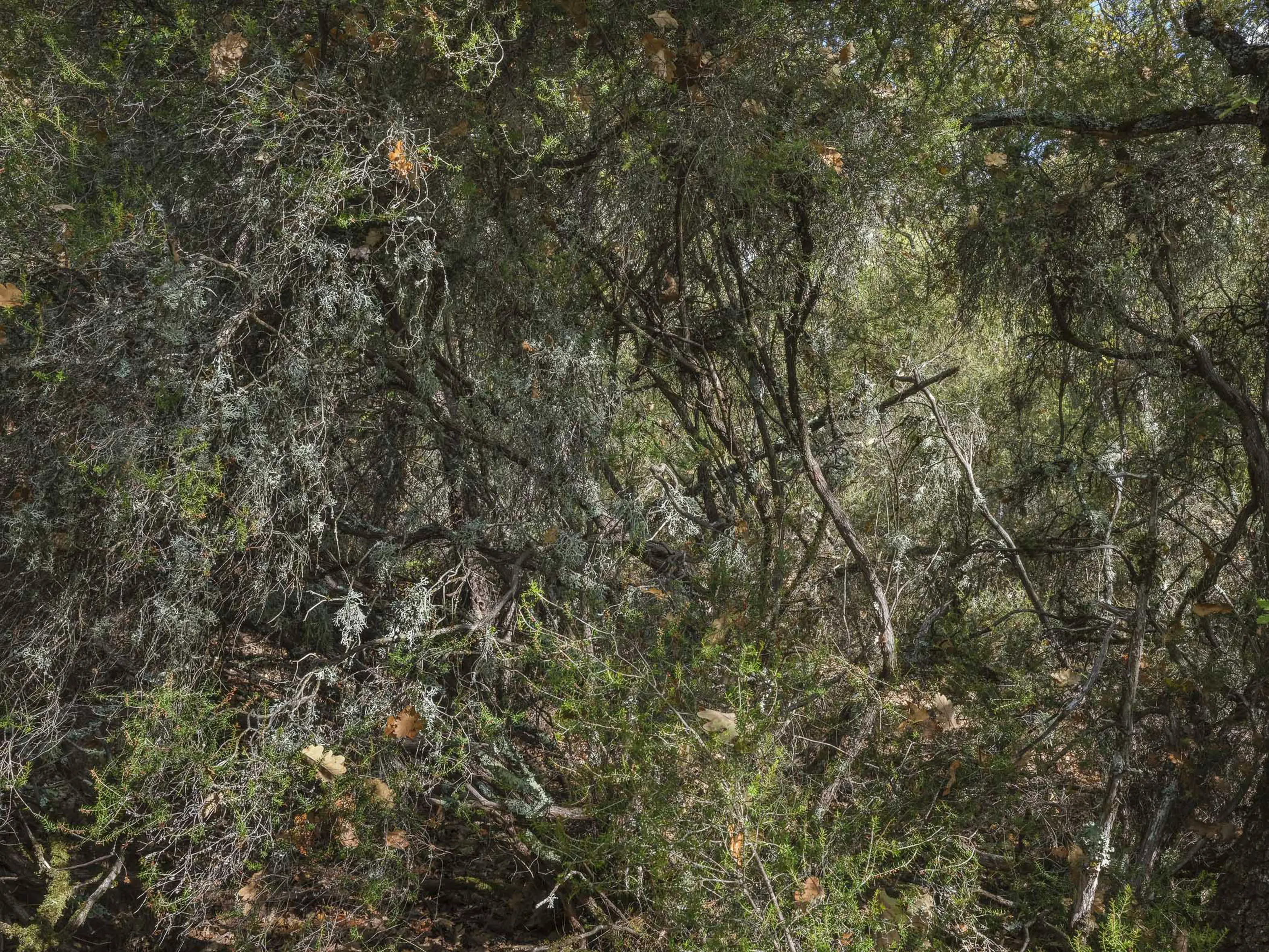
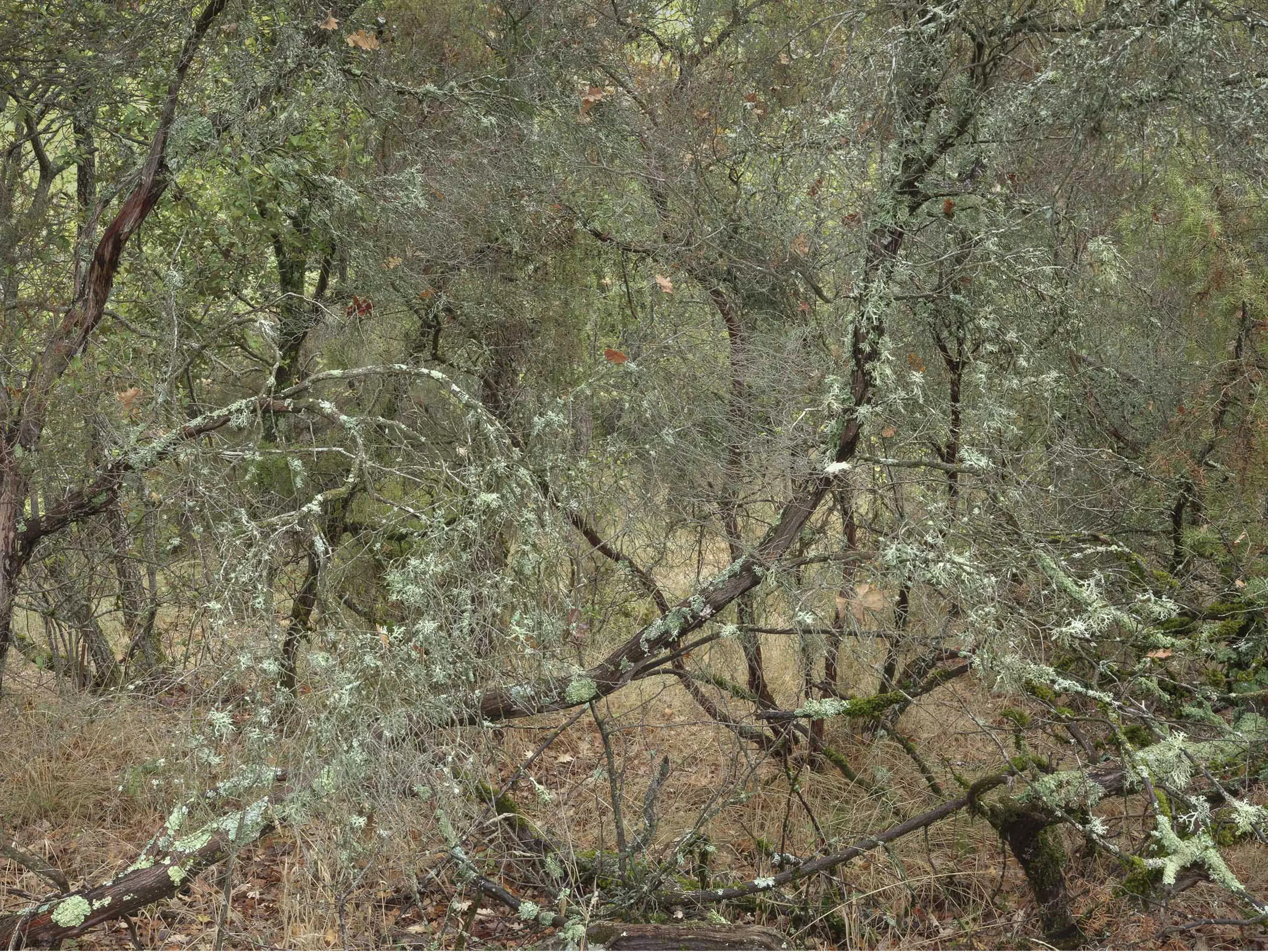
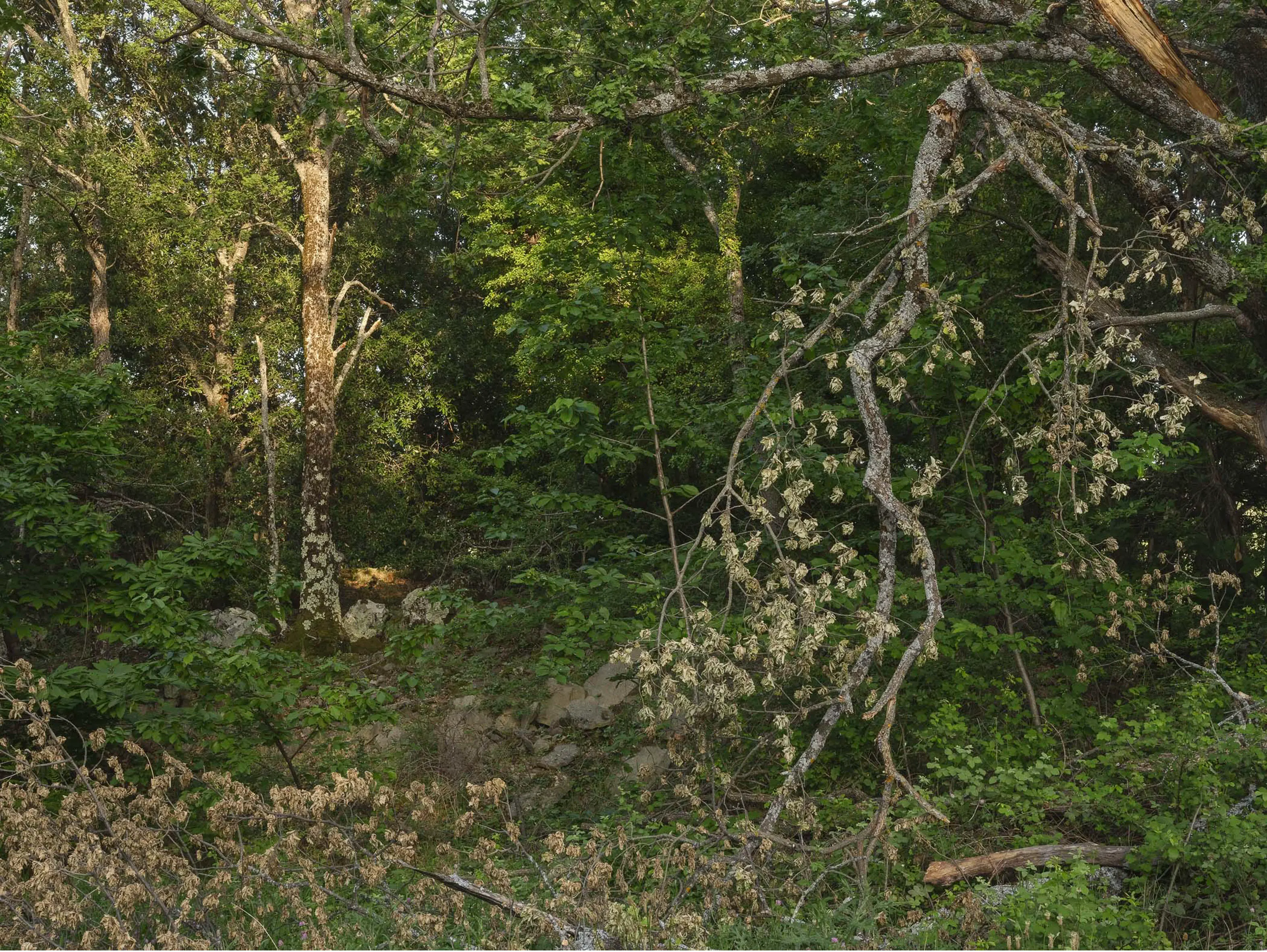
The photographs presented at the Domain of Chaumont-sur-Loire follow naturally from this approach. Taken in a forest in the Luberon, where he has been working for several years, they focus on subjects of apparent simplicity. Gnarled branches, lichen-covered trunks and undergrowth through which light filters softly create a world in which nothing seeks to impose itself. Yet, as the gaze lingers, forms begin to respond to one another, textures come alive and the living world reveals itself. Far removed from any romantic or picturesque vision of nature, Gilbert Fastenaekens transforms the forest into a space of attentive observation, where every detail becomes the setting for an encounter.
Displayed in the Donkey Stables, these works enter into a natural dialogue with the landscape of the Domaine de Chaumont-sur-Loire. They remind us that Gilbert Fastenaekens' photography does not seek to exhaust the mystery of nature, but rather invites us to slow down and appreciate the quiet majesty of the everyday.
BIOGRAPHICAL NOTES
Gilbert FASTENAEKENS
BELGIUM
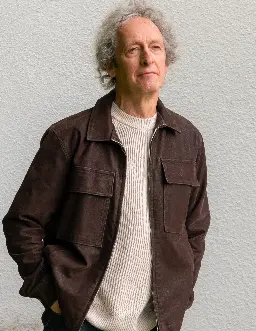
Gilbert Fastenaekens was born in Brussels in 1955. Quickly recognised for his night-time photographs of urban landscapes, he took part in the DATAR photographic mission in France in 1984. Works from this period were brought together in the publications Nocturne and Essai pour une archéologie imaginaire. In them, he depicts a deserted city, where the night transforms the urban topography into a setting of enigmatic, abandoned grandeur, suspended in a temporary stillness.
In 1987, during a photographic commission focusing on the Belfort region (Les quatre saisons du territoire), he incorporated the notion of landscape into his work, concentrating the full intensity of an intimate and contemplative experience within a small area. This approach developed further in 1988 through a project confined to a forest in Champagne-Ardenne, entitled Noces. Alongside this, between 1990 and 1996, he undertook an extensive photographic study of Brussels, published under the title Site (ARP Éditions, 1996). A publisher and teacher (ARP Éditions, 1993–2013), and a lecturer at La Cambre (Brussels) and the Institut Supérieur Libre des Arts Plastiques (ERG-Brussels) for more than 35 years, Gilbert Fastenaekens combines artistic practice with the transmission of knowledge.
Over the past three years, two projects have coexisted. Besos, territorio elargi is a commission from MACBA in Barcelona, inviting artists to observe the city's territories. Produced as a video, this work comprises a series of sequences without narrative, focusing on static shots in which the urban setting takes centre stage before passers-by appear, becoming participants in multiple micro-narratives of everyday life. While this work offers an in-depth exploration of the movements of a city, his other ongoing photographic project, set in a forest in the Luberon, takes a more contemplative approach, based on the silent observation of fragments of vegetation and revealing the almost imperceptible.